


Table of Contents
- Why Your Scalp Feels Dry and Itchy: The Real Causes
- Best Natural Oils for Scalp Health and Hydration
- Remedy 1: Coconut Oil Pre-Wash Treatment
- Remedy 2: Diluted Tea Tree Oil for Scalp Care
- Remedy 3: Apple Cider Vinegar Rinse to Balance pH
- Remedy 4: Aloe Vera Gel for Soothing Irritation
-
How Often to Wash Hair for Dry Scalp Relief
- The Science of Sebum and Why Frequency Is a Moving Target
- A More Nuanced Frequency Guide Based on Hair Porosity and Scalp Condition
- The Role of Water Temperature and pH in Washing
- How to Extend the Interval Without Triggering a Full Wash Cycle
- A Washing Protocol That Supports Recovery
- When Frequency Is Not the Problem: The Over-Washing Trap
- Daily Habits and Prevention Tips for a Healthy Scalp
- Frequently Asked Questions
Last Updated: September 8, 2026
Why Your Scalp Feels Dry and Itchy: The Real Causes
Dry itchy scalp is a frustrating cycle of tightness, flaking, and irritation that often stems from a compromised scalp barrier. When the protective lipid layer weakens, moisture escapes and triggers transepidermal water loss, leaving the skin vulnerable to irritants. At Primal Hair, we focus on scalp wellness as the foundation for healthier hair.

The most common triggers include harsh sulfate shampoos that strip sebum production, hard water mineral buildup, and over-washing. For adults over 30, natural sebum output also declines with age, which accelerates dryness. Many people also mistake seborrheic dermatitis for simple dryness; that condition involves malassezia yeast overgrowth and requires a different approach than basic moisturizing.
Below, we walk through four targeted natural remedies, application techniques, and the washing frequency that supports recovery.
Best Natural Oils for Scalp Health and Hydration
Carrier oils replenish lipids and reduce moisture loss. Jojoba oil closely mimics human sebum, making it an excellent lightweight moisturizer that does not clog follicles. Argan oil delivers fatty acids and vitamin E without leaving a heavy residue. Olive oil penetrates the hair shaft but should be used sparingly on fine hair to avoid buildup.
The best natural oils are non-comedogenic, rich in antioxidants, and easily absorbed. Coconut oil reduces protein loss in hair, though its heavier molecular weight suits thick or curly textures best. For fine, straight hair, jojoba or grapeseed oil serve better without weighing strands down.
Remedy 1: Coconut Oil Pre-Wash Treatment
Coconut oil is a popular pre-wash option that can help condition dry-feeling hair and scalp. This pre-wash treatment works best as a weekly ritual, since overuse can lead to buildup on fine hair.
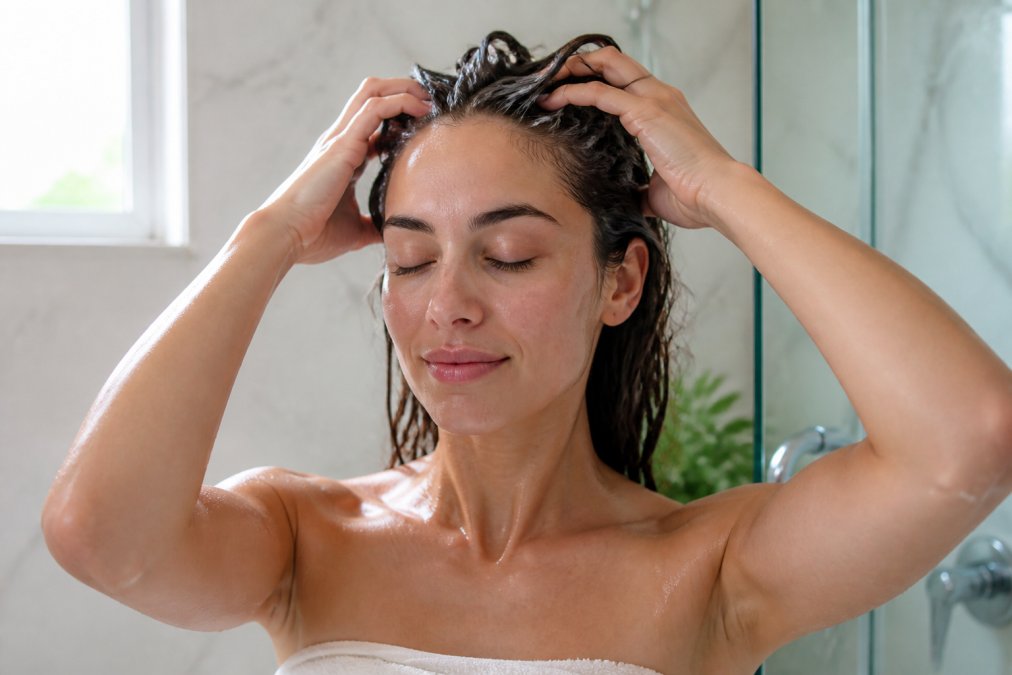
To apply: warm two tablespoons of virgin coconut oil between your palms, part your hair in sections, and massage the oil onto the scalp using circular motions. Leave it on for 20 to 30 minutes, then shampoo thoroughly. For deeper conditioning, wrap your hair in a warm towel and leave the oil on for up to two hours. A common mistake is using too much oil, which forces aggressive shampooing that strips the moisture you just added.
Remedy 2: Diluted Tea Tree Oil for Scalp Care
If applied undiluted, it can cause chemical burns and severe scalp irritation. The safe dilution ratio is 3 to 5 drops of tea tree oil per tablespoon of a carrier oil such as jojoba or coconut (nccih.nih.gov).
Why Dilution Matters for Your Scalp Type
The carrier oil actively changes how tea tree oil interacts with your scalp. For fine, straight hair, jojoba oil is preferred because it mimics human sebum and rinses out cleanly. For thick, curly, or coily hair, a heavier carrier like fractionated coconut oil or sweet almond oil provides additional slip and moisture.
If you have color-treated hair, be cautious. Some essential oils can accelerate fading, especially on red or fashion colors. Perform a strand test first: apply the diluted blend to a hidden section, wait 15 minutes, rinse, and check for color transfer on a white towel. If you see color lift, switch to a gentler remedy like pure aloe vera gel.
A Step-by-Step Application Protocol for Itch Relief
- Prepare the blend fresh. Mix 3 drops of 100% pure tea tree oil into 1 tablespoon of your chosen carrier oil. Do not pre-mix large batches; the oil can oxidize and lose potency.
- Section your hair into four quadrants. Clip three sections away and work on one at a time for even coverage.
- Apply with a dropper or pipette. Place 3-4 drops along each part line to prevent over-saturation and ensure the blend reaches the skin.
- Massage with fingertips, not nails. Use firm, circular pressure for two minutes; massage gently for two minutes to distribute the oil evenly. Avoid scratching, which can create micro-tears.
- Leave on for 15 minutes maximum. Leaving it longer does not increase efficacy; it only increases the risk of sensitization.
- Rinse thoroughly with lukewarm water, then shampoo. You may need to shampoo twice to fully remove the oil. Follow with a lightweight conditioner on the mid-lengths and ends only.
When to Skip This Remedy Entirely
Tea tree oil is not appropriate for everyone. If you have eczema, psoriasis, or any open sores or broken skin on your scalp, skip this remedy. The oil can penetrate compromised skin too deeply, triggering a flare-up or severe allergic reaction. If you have a known allergy to the myrtle family (which includes tea tree), avoid it completely.
Remedy 3: Apple Cider Vinegar Rinse to Balance pH
Apple cider vinegar helps restore the scalp's natural acidic pH (4.5 to 5.5), a properly diluted may help remove product buildup and leave the scalp feeling refreshed. The standard ratio is one to two tablespoons of raw, unfiltered apple cider vinegar diluted in one cup of water.
After shampooing, pour the mixture over your scalp, let it sit for two to three minutes, then rinse with cool water. The vinegar smell dissipates as your hair dries. Limit this rinse to once per week, since overuse can dry out the hair shaft. If you have color-treated hair, test the rinse on a small strand first. People with open sores or severe inflammation should skip this remedy and consult a dermatologist.
Remedy 4: Aloe Vera Gel for Soothing Irritation
Aloe vera provides lightweight hydration and can leave a dry-feeling scalp feeling soothed and refreshed. Unlike oils, aloe vera suits every hair type and can be used as often as needed without causing buildup. It also contains compounds that support the scalp microbiome.
For best results, use pure aloe vera gel straight from the leaf or a preservative-free product. Apply it directly to the scalp, massage gently for two minutes, and leave it on for 20 minutes before rinsing. You can also mix aloe vera with a few drops of peppermint oil for a cooling sensation. Keep the gel refrigerated for an extra soothing effect. This remedy pairs well with the coconut oil treatment on alternating days.
How Often to Wash Hair for Dry Scalp Relief
For most people with a dry itchy scalp, washing two to three times per week is the sweet spot. Washing daily strips the scalp of its natural protective oils, while going too long between washes allows dead skin cells, sweat, and product residue to accumulate. The right frequency depends on your hair type, activity level, and products.
The Science of Sebum and Why Frequency Is a Moving Target
Your scalp produces sebum at a rate influenced by genetics, hormones, and age. Sebum is a complex mixture of triglycerides, wax esters, squalene, and free fatty acids that form a protective acidic film known as the acid mantle, maintaining a pH between 4.5 and 5.5. When you wash too frequently with harsh sulfates, you strip this mantle, and the scalp overcompensates by producing more sebum, creating a vicious cycle of oiliness followed by dryness and irritation.
Conversely, if you wait too long between washes, sebum oxidizes on the scalp surface. Oxidized sebum becomes comedogenic and can trap dead skin cells, leading to flaking mistaken for dryness. The key is to find a frequency that removes oxidized sebum without stripping the acid mantle.
A More Nuanced Frequency Guide Based on Hair Porosity and Scalp Condition
Hair Type |
Recommended Washing Frequency |
Key Consideration |
|---|---|---|
Fine, straight hair |
3 times per week |
Light oils like jojoba prevent buildup; avoid heavy butters |
Thick, curly hair |
1-2 times per week |
Coconut oil suits this texture well; co-washing (conditioner-only) can extend intervals |
Oily scalp |
Every other day |
Focus shampoo on roots only; consider a low-pH shampoo (5.5 or lower) |
Dry, sensitive scalp |
2 times per week |
Use lukewarm water, not hot; add a pre-wash oil treatment |
Low-porosity hair |
2 times per week |
Avoid protein-heavy conditioners; use warm water to open the cuticle for cleansing |
High-porosity hair |
1-2 times per week |
Use cool water rinses to seal the cuticle; focus on moisture retention |
The Role of Water Temperature and pH in Washing
Hot water is a primary culprit in worsening dry scalp. Water above 105°F (40°C) dissolves the lipid barrier more aggressively than lukewarm water (peer-reviewed research). Finish every wash with a 30-second cool rinse (around 70°F/21°C) to support the scalp barrier. Additionally, standard shampoos often have a pH of 6.5 to 7.5, which is alkaline relative to the scalp's natural 4.5 to 5.5. This alkalinity swells the hair cuticle and disrupts the acid mantle. Look for shampoos labeled "pH-balanced" or "low-pH," ideally in the 4.5 to 5.5 range.
How to Extend the Interval Without Triggering a Full Wash Cycle
If your scalp feels tight by day three, a dry shampoo or a light water mist can extend the interval. However, most commercial dry shampoos contain starches and alcohols that can accumulate and clog follicles if used repeatedly. Apply dry shampoo only to the roots, wait two minutes, then brush it through thoroughly. A better alternative for dry scalp is a simple rosewater mist: fill a small spray bottle with distilled water and add 2 drops of lavender essential oil (optional). Spritz lightly over the scalp and massage in.
A Washing Protocol That Supports Recovery
When you do wash, follow this sequence to maximize moisture retention:
- Pre-oil the scalp 20 minutes before washing if you are using a coconut or jojoba treatment. This creates a protective layer that reduces the stripping effect of shampoo.
- Shampoo once, not twice. A single lather is sufficient unless you have heavy product buildup.
- Focus shampoo on the roots and conditioner on the ends. Never apply conditioner directly to the scalp unless it is specifically formulated for scalp health.
- Rinse with lukewarm water, then finish with a cool blast. This seals the cuticle and supports the scalp barrier.
When Frequency Is Not the Problem: The Over-Washing Trap
A common pattern among people with persistent dry scalp is that they reduce washing frequency to once per week, only to find their scalp becomes itchier. This happens because sebum and dead skin cells accumulate, feeding Malassezia yeast. If your symptoms worsened, the issue is not frequency but the type of cleanser. Switch to a gentle, sulfate-free shampoo with a pH of 5.5 and wash twice per week for two weeks. If symptoms persist, the cause may be seborrheic dermatitis, which requires antifungal agents like ketoconazole or zinc pyrithione.
Daily Habits and Prevention Tips for a Healthy Scalp
Preventing a dry itchy scalp requires consistent habits rather than occasional rescue treatments. Start by switching to a sulfate-free shampoo and washing with lukewarm water. Protect your scalp from sun exposure with a hat, since UV damage accelerates moisture loss. During winter, indoor heating reduces humidity, so consider a humidifier in your bedroom.
Diet also plays a role. Omega-3 fatty acids, found in fish and flaxseed, support the skin's lipid barrier, while adequate water intake keeps skin cells hydrated. Stress management matters too, as elevated cortisol levels can increase sebum production and trigger inflammatory responses that worsen itching.
For those seeking additional support, the PRIMAL HAIR - Botanical Hair & Scalp Serum ($37.95) combines Rosemary Extract, Ginger Root Extract, and Licorice Root Extract to help moisturize and nourish the scalp while supporting the appearance of healthy-looking hair. Its lightweight formula layers well under the natural remedies above. Regular scalp checks and avoiding tight hairstyles that pull at the roots round out a comprehensive prevention routine.
Treating a dry itchy scalp takes consistency, but the right combination of natural remedies and daily habits can restore comfort and support the appearance of healthy-looking hair. Start with the coconut oil pre-wash, add the aloe vera gel for daily soothing, and adjust your washing frequency based on your hair type. Get started with Primal Hair's botanical serum and give your scalp the nourishment it needs to thrive.
Frequently Asked Questions
What am I lacking if I have a dry scalp?
A dry, itchy scalp often points to low levels of essential fatty acids, particularly omega-3s, and vitamin D. Dehydration and insufficient zinc can also weaken the scalp barrier, increasing transepidermal water loss. Boost your intake through foods like salmon, walnuts, and flaxseed, and drink water consistently. If flaking persists after dietary changes, consider a dermatologist visit to rule out seborrheic dermatitis or other conditions that mimic simple dryness.
How do I stop my scalp from being dry and itchy fast?
For immediate relief, apply a few drops of jojoba or squalane oil directly to the scalp and massage gently for two minutes to soothe tightness. Follow with a cool water rinse, not hot, to avoid stripping natural oils. A pure aloe vera gel applied to the itchy areas can calm irritation within minutes. Patch test any new oil first, and avoid scratching, which worsens inflammation and can damage hair follicles.
Can dehydration cause a dry scalp?
Yes. When your body is dehydrated, it prioritizes water for vital organs, leaving the skin and scalp parched and more prone to flaking. Your scalp barrier weakens, allowing moisture to escape and irritants to enter. Drinking adequate water daily supports overall skin hydration, but topical moisturizing is still necessary. Combine internal hydration with a lightweight scalp serum or natural oil to restore balance and reduce itchiness.
When should I see a dermatologist for scalp issues?
See a dermatologist if your dry itchy scalp does not improve after two weeks of consistent home treatment, or if you notice severe redness, swelling, bleeding, or hair loss in patches. These symptoms can indicate seborrheic dermatitis, psoriasis, or a fungal infection that requires prescription treatment. Sudden, intense itching that disrupts sleep also warrants medical advice to rule out underlying conditions like thyroid issues or allergies.